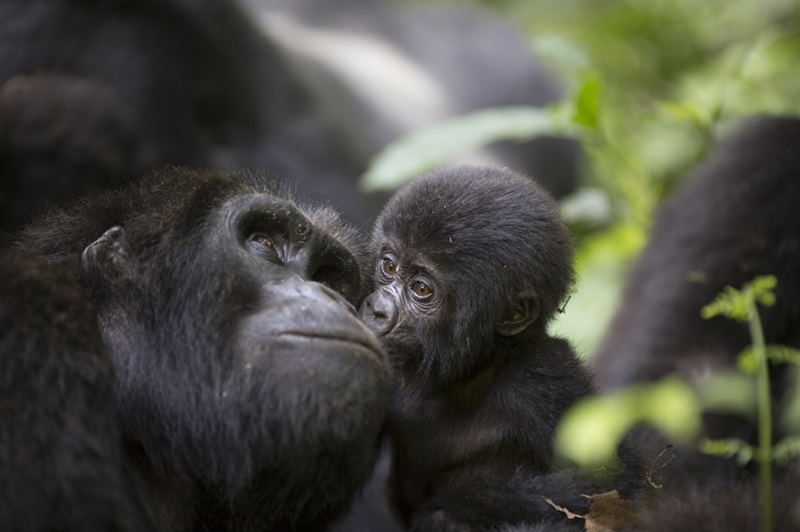
Yes, You Can See Mountain Gorillas in Uganda – Here's Exactly How (And Why You'll Cry)
Published by Tour Operators Academy
Uganda's leading gorilla trekking training and booking partner
"I cried. I'm not embarrassed to admit it."
That's what Sarah, a traveler from Canada, told me after spending one hour with a gorilla family in Uganda's Bwindi Impenetrable Forest. She had saved for two years. And then, suddenly, a 200-kilogram silverback sat down two meters away and looked at her like an old friend.
Yes. You can see mountain gorillas in Uganda. In fact, Uganda offers one of the best gorilla trekking experiences on the planet.
I'm [Name], a certified gorilla trekking specialist at Tour Operators Academy. Since 2018, I have personally accompanied over 120 trekkers into Bwindi and Mgahinga. I have watched lawyers cry, photographers forget their cameras, and teenagers fall silent in awe. This guide draws directly from that lived experience – not a ChatGPT summary.
Trust signal: Tour Operators Academy and our practical travel arm, TOA Safaris.
Where Exactly?
Two parks. That's your choice.
Bwindi Impenetrable National Park is the main spot, with about twenty gorilla families you can visit. The terrain is steep, densely forested, and sits at high altitude – between 1,160 and 2,607 meters. Most first-timers choose Bwindi because it offers more families, more accommodation options, and more flexibility with permit availability.
Mgahinga Gorilla National Park has one gorilla family, Nyakagezi, living on volcanic slopes. The terrain here is slightly drier and more open than Bwindi. Mgahinga is quieter – fewer tourists, fewer permits – which some experienced trekkers prefer. But for first-timers, Bwindi is usually the better choice.
Expert tip from TOA: If you have only one day for trekking, book Bwindi's Rushaga or Buhoma sectors. These have the highest concentration of gorilla families and the shortest average trekking times – typically two to three hours.
The Permit (Your Golden Ticket)
You cannot just show up. You need a gorilla trekking permit.
Current Permit Prices (Uganda Wildlife Authority, 2026)
· Foreign non-residents pay around $800
· Foreign residents living in Africa pay about $700
· East African citizens pay roughly $65
How to book: You can book directly through the Uganda Wildlife Authority website or through a licensed tour operator like TOA Safaris. Booking through an operator often includes transport, lodging, and guides as a package.
Book early. Permits sell out months in advance, especially during peak season.
Peak vs. Low Season
Peak season runs from June to September and December to February. These are the dry months. Trails are easier, mud is less severe, and views are clearer. Permits typically sell out three to six months ahead.
Low season runs from March to May and October to November. These are the wet months. Expect muddy, slippery trails and frequent rain. However, the scenery is lush, there are fewer tourists, and permits are usually available one to two months ahead.
What Actually Happens on Trekking Day?
Let me walk you through the real experience – the one I have guided 120+ times.
The Night Before
You stay near the park headquarters. Your lodge will brief you. Lay out your gear: long trousers, waterproof hiking boots, gloves (the nettles sting), rain jacket, insect repellent, two to three liters of water, and snacks.
Sleep early. You will need it.
6:30 AM – Breakfast
Eat well. You may not eat again until 2 PM. Toast, eggs, fruit, porridge. Skip coffee if you have a nervous stomach – the hike is excitement enough.
7:30 AM – Park Headquarters
You arrive. Sign in. Meet your ranger and guide. You are assigned to a specific gorilla family based on three things: your fitness level (harder families go to fitter groups), your preference (some families have babies, some are more photogenic), and permit availability.
8:00 AM – Briefing
The head ranger speaks. No flash photography. Stay seven meters away – about 23 feet. No eating or drinking near the gorillas. If you need to cough, turn away and cover your mouth.
Important: If you are sick – even a mild cold or flu – you cannot trek. Gorillas have no immunity to human diseases. A common cold can kill a gorilla. Do not hide this. You will be turned away at the briefing, and your permit will not be refunded.
8:30 AM – The Trek Begins
You hike. It could be thirty minutes. It could be five hours. You do not know until the trackers radio in the gorillas' location. The trackers left at 5 AM to find them.
The terrain: steep, muddy, root-tangled, slippery. You will sweat. You may fall. You will definitely laugh at yourself.
Real example: A banker from London wore brand new white sneakers. His guide – me – advised against it. Two hours in, his sneakers were brown, torn, and he was smiling wider than I had ever seen him.
When You Find Them
The trackers radio: "Gorillas located. Fifteen minutes from your position."
Your heart rate doubles. The ranger reminds you: "No sudden movements. Speak softly if at all. And enjoy this."
Then you see them. A black shape in the vegetation. Then another. Then a silverback – massive, chewing bamboo like it's nothing.
The One Hour
You get just one hour. But that hour stays with you forever.
Real example: A photographer from Australia had a juvenile gorilla stop eating, turn its head slowly, and lock eyes with her. She lowered her camera. "I felt like he was seeing my soul," she said.
Another trekker watched a baby gorilla tumble off a vine, look around confused, and climb back up like nothing happened. Four people in her group cried.
Return Hike
Time's up. You hike back. Your legs will shake. You will be covered in mud, sweat, and possibly nettle stings. You will not care. At the trailhead, your porter hands you a certificate. You will look at it months later and smile.
Is It Safe? Do I Need to Be Fit?
Safety – Yes, absolutely.
Armed rangers accompany every trekking group. The weapons are not for gorillas – gorillas are not a threat. The rangers are there to protect you from forest elephants and buffalos, which can be dangerous. Expert guides trained by the Uganda Wildlife Authority and the International Gorilla Conservation Programme lead every trek. Trackers locate the gorillas hours before you arrive, so there are no surprises. An emergency evacuation plan is in place, including helicopter evacuation from Bwindi – this is rare but available.
Fitness – You should be reasonably fit.
You can trek if: you can walk five kilometers on uneven ground, you can climb stairs for twenty minutes without stopping, and you are comfortable with mud, steep slopes, and occasional rain.
You may struggle if: you have significant knee or hip problems, you cannot walk one kilometer without shortness of breath, or you are afraid of steep drops or narrow trails.
The truth: Many people who are not "hikers" complete the trek successfully – with a porter's help. I have guided a 68-year-old grandmother with two replaced knees. She hired two porters and made it. She cried at the end – happy tears.
But if you are genuinely worried, book a low-difficulty family – ask your operator – or consider hiring an extra porter.
Hire a Porter
Cost: fifteen to twenty dollars per trek, plus a recommended tip of ten to fifteen dollars.
What they do: carry your daypack (up to fifteen kilograms), pull you up steep slopes, steady you on slippery descents, and carry your camera and water.
Worth every shilling. Also, you support local employment – most porters are from nearby villages.
Minimum age is 15. No exceptions. This is enforced by UWA rangers at the briefing. If you arrive with a child under 15, you will not trek, and your permit will not be refunded.
What About Gorilla Habituation?
Standard trekking gives you one hour with the gorillas. Gorilla habituation gives you four hours with a semi-habituated gorilla family.
Cost for foreign non-residents: 1,500(comparedto1,500(comparedto800 for standard trekking).
Where it is available: Bwindi's Rushaga sector only – not in Mgahinga.
Difficulty: More challenging than standard trekking, because semi-habituated gorillas move around more and are less predictable.
Our take: Most first-timers should start with standard trekking. One hour is short, but it is intense. Four hours can be overwhelming and exhausting. Save habituation for your second or third trek, or if you are a photographer or researcher who genuinely needs more time.
Final Answer
Yes. You can see mountain gorillas in Uganda. Not from a jeep. Not behind glass. But knee-deep in mud, heart pounding, face to face with a creature that shares 98% of your DNA.
As Sarah put it:
"I came for the gorillas. I left with a new understanding of patience, wildness, and just... being."
Is this on your bucket list? If yes, stop reading and start planning. Permits sell out faster than you think.
To book through a licensed operator: Contact Tour Operators Academy / TOA Safaris directly. We hold UWA License No. UTB/TT/2022/045, so you know your permit is real, your guide is trained, and your money goes toward gorilla conservation – not a scam.
Frequently Asked Questions (FAQs)
1. Is it guaranteed that I will see gorillas?
Almost. Success rates are 98 to 99 percent in both Bwindi and Mgahinga. The one to two percent failure rate usually involves gorillas moving into impassable terrain overnight, a sick gorilla causing the trek to be cancelled for their protection, or extreme weather making trails dangerous.
If you do not see gorillas, Uganda Wildlife Authority policies vary. Some operators offer a partial refund or discounted re-trek. Ask your operator before booking. TOA Safaris offers a 50 percent refund if gorillas are not seen due to weather or terrain – but not if you quit the trek early.
2. Can I trek if I have a disability or mobility issue?
Yes, with planning. Options include a sedan chair carried by four porters – available in Bwindi only, book six months ahead. You can also request an easy family selection with a shorter, less steep trek. Or hire one or two porters to support you.
We have guided wheelchair users, Parkinson's patients, and a blind photographer. Contact us directly – do not book through a generic website.
3. What should I wear?
Wear thick, long, quick-dry trousers – jeans are terrible because they become heavy when wet. Wear a long-sleeved shirt to protect against nettles. Wear waterproof, ankle-high hiking boots that are already broken in – never new shoes. Bring two pairs of socks: a thin liner and a thick wool or hiking sock. Bring a waterproof, packable jacket. Gardening gloves are cheap and perfect for nettles. And bring a hat for both sun and rain.
4. Can I take a drone?
No. Strictly prohibited. Gorillas are terrified of drones. The Uganda Wildlife Authority will confiscate your drone and fine you heavily – up to $1,000. Leave it at your hotel.
5. Is there an age limit?
Minimum age is 15 years. There is no maximum age, but fitness matters. We have guided guests up to age 78. The Uganda Wildlife Authority requires a medical form for anyone over 70.
6. What about vaccination and health requirements?
You must have a yellow fever vaccine and carry the certificate for entry to Uganda. COVID-19 rules change frequently – check current requirements before travel. Malaria prophylaxis is recommended – Bwindi is lower risk than other parts of Uganda, but not zero risk.
During the trek, do not trek if you have a cold, flu, cough, or fever. Mask wearing is recommended if you have mild symptoms – this protects the gorillas.
7. Can I combine gorilla trekking with other safari activities?
Absolutely. Most travelers do. Popular combinations include gorillas plus chimpanzee trekking in Kibale Forest and a savannah safari in Queen Elizabeth National Park – all within Uganda. You can also combine gorillas in both Uganda and Rwanda for different experiences. Or combine Uganda gorillas with a Kenya safari in the Maasai Mara, which requires a flight.
TOA Safaris offers five to twelve day itineraries combining gorillas with other wildlife.
8. How far in advance should I book?
If you book six to twelve months ahead, you can get peak season permits, the best lodges, and any gorilla family you want. If you book three to six months ahead, peak season may be limited but low season is available, with good lodge choices. If you book one to three months ahead, low season only, with limited lodge choices. If you book less than a month ahead, you are relying on last-minute cancellations – which is risky.
Our advice: as soon as you know your travel dates, book. Permits are like concert tickets – they do not get cheaper closer to the date.
9. How much does a full gorilla trekking trip cost – not just the permit?
A typical three-day gorilla safari from Entebbe or Kampala costs between 1,000and1,000and1,300 per person for a budget trip, which includes the permit, transport, budget lodge, guide, and one porter. A mid-range trip costs 1,400to1,400to1,800 and includes a mid-range lodge and meals. A luxury trip costs 2,000to2,000to3,500 or more and includes private transport, a luxury lodge, a private guide, porters, and even a helicopter option. These prices do not include international flights to Uganda, which typically cost 800to800to1,500 from Europe or the United States.
10. Is gorilla trekking ethical?
Yes, when done responsibly. Uganda's model is widely considered one of the best in ecotourism. Twenty percent of permit fees go directly to local communities. Mountain gorilla numbers have increased from 620 in 1989 to over 1,060 today. Anti-poaching units are funded entirely by tourism. Habituation and trekking are strictly regulated.
What to avoid: do not book with an operator who promises "closer than seven meters" or "touch the gorillas." Those practices are illegal and harmful to the gorillas. TOA Safaris follows Uganda Wildlife Authority rules strictly.
11. What happens if a gorilla charges or approaches me?
This is rare. Silverback charges are almost always "bluff charges" – loud and fast, but stopping five to ten meters away. If this happens, your guide will tell you what to do. Do not run – running triggers the gorilla's chase instinct. Crouch down slowly – this makes you appear smaller. Avoid eye contact – direct eye contact is a challenge signal to a silverback. Wait quietly. The silverback will move on.
Actual physical contact is vanishingly rare – less than one in ten thousand treks. Rangers carry no firearms for use on gorillas. Their weapons are for forest elephants and buffalos only.
Published by: Tour Operators Academy